I yelled at my child. What now? Repair in the next hour, and the morning after
The voice was too loud, and the face in front of you went small. What to do in the next hour, what to say at which age, and what to leave out.
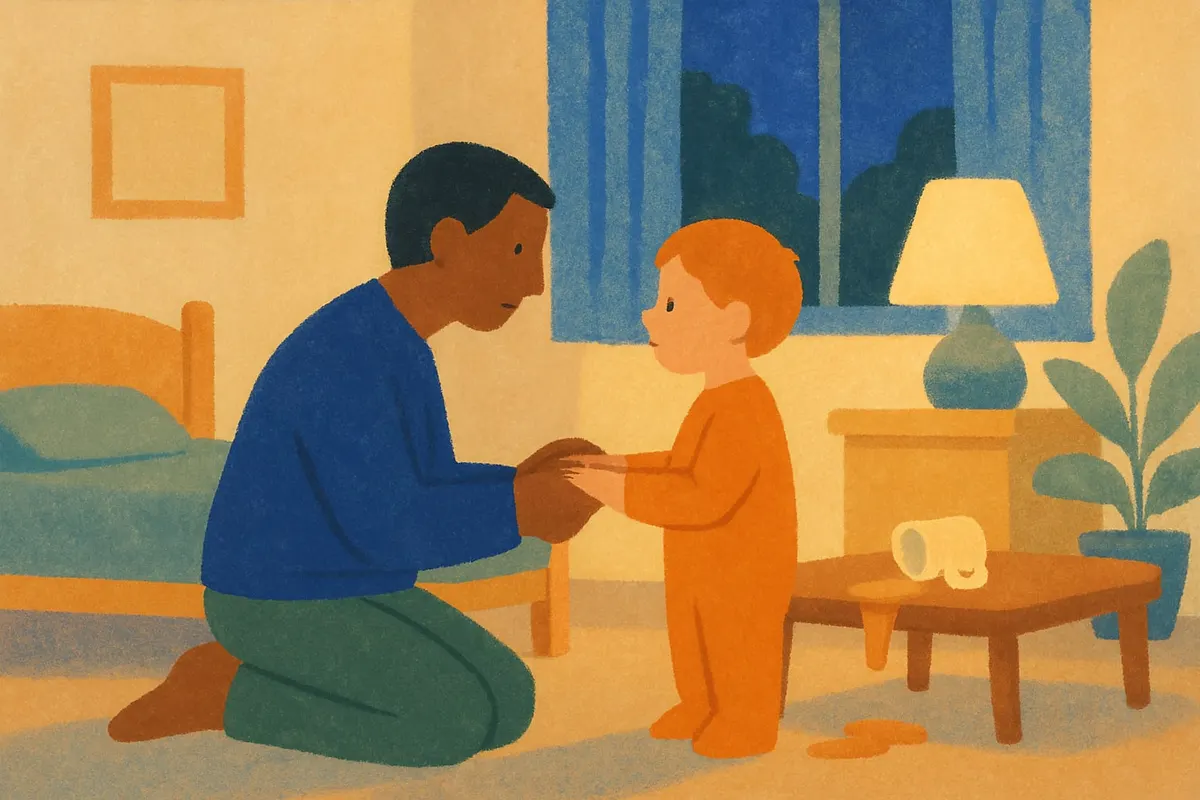
The door is closed, the house is quiet, and you're standing in the kitchen replaying it. The voice was louder than the spilled juice deserved. The face in front of you went small. Now the guilt comes, and with it the urge to either fix everything at once or act as if nothing happened. Neither helps much. What helps is simpler, and you can do it tonight.
First, the next five minutes
Before you go back in, bring your own body down. Breathe out longer than you breathe in, three or four times. Drink a glass of water. Repair from a calm place works; repair while you're still shaking easily turns into round two. If a small child is upset and alone, go back sooner and just be there without saying much. A hand on the back says enough. The words can come later.
What to say
Short, and about you, not about them. “I yelled at you. That was too loud. I'm sorry.” Then, if it fits: “You didn't deserve that. I was tired and angry, and that's mine to deal with, not yours.” Three things are in there: you name what happened, you own it, and you take the weight off the child.
What to leave out: “but you didn't listen”. The “but” cancels everything before it. You can still talk about the juice, the shoes or the homework, later and separately. The limit was fine. The volume wasn't.
By age
Two to five: fewer words, more body. Get down to their height, hug if they want one, say one sentence. “I was loud. I'm sorry. I love you.” Small children often move on faster than we do. That doesn't mean it didn't matter. It means the repair landed.
Six to ten: they can take a real conversation. Ask how it was for them, and listen to the answer without defending yourself. Some children say “it's okay” right away. You can answer: “That's kind of you. It still wasn't okay of me.”
Eleven and up: don't expect a hug, and don't chase one. A short sentence in passing works better than a sit-down talk: in the car, on the way out, through the door. “Earlier was too much from me. Sorry.” You might get a shrug. The shrug counts. They heard you.
What repair is not
It's not a long speech about how bad you feel. Then the child ends up comforting you, and that's the wrong way round. It's not a treat to make up for it; that teaches a different lesson. And it's not a promise that it will never happen again. You'll break it, and the child will remember the promise more than the apology. “I'm working on it” is honest and enough.
Why it matters
Developmental research has a plain, kind message here: no parent stays in tune with their child all the time, and children don't need that. What matters is that the break gets mended, again and again. A child who gets an honest apology learns that strong feelings pass, that the relationship holds, and what to do after their own outburst. You teach that tonight. Not in spite of the yelling, but in how you come back from it.
The morning after
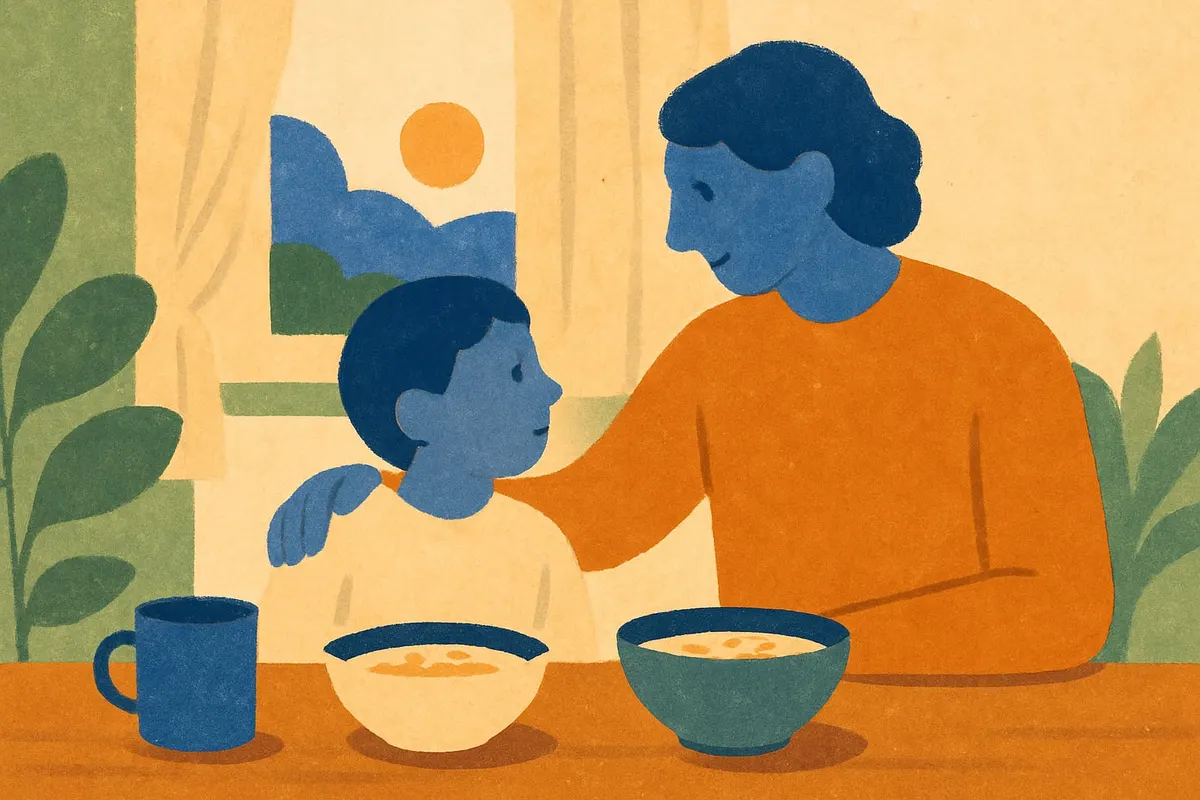
Sometimes the moment has passed, the child is asleep, you're both done. Then at breakfast. “I've been thinking about yesterday. I was too loud. I'm sorry.” That's not too late. It's rarely too late.
When it's most days
If you yell most days, an apology every evening isn't the fix, and you know it. Then the question is the tank: sleep, time that's yours, help with the load. Look there, not at your character. And if you're afraid you'll hurt your child, or it has already happened, talk to your doctor or a family counseling service this week. That isn't failure. It's what a responsible parent does when it's too much.
In the app for this
- Free · PlusPractices “Three seconds before you react”, “Ride out a big feeling together” and “Make it right after shouting”, with steps and a why.
- FreeThe reflection round “Feelings weather” at the table: everyone says what weather they had today, the parents go first.
- Free · PlusMap steps like “Calm boundary, honest repair” and “The need under the behavior”, if the check puts you in that pattern.
Free is free for good. Plus opens the whole map, all cards, games and practices.
Get a plan for your family
The free family check with Mila takes five minutes. You get your family pattern and the first step of your Parenting Map.
Start the free family checkKeep reading
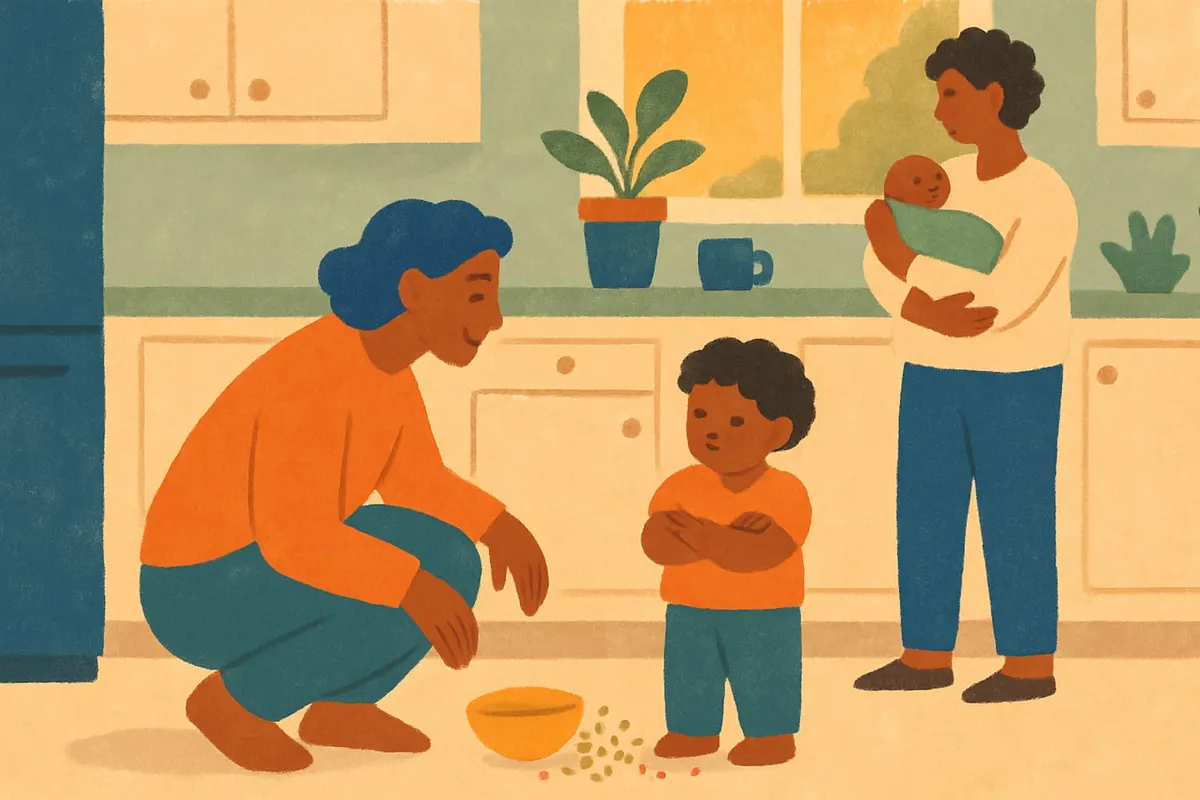
How to stop yelling at your kids: five sentences that work instead, from tantrum to teenager
7:52, the shoes aren't on, and the sentence that comes out of you has a volume you didn't choose. Here is what happens in you before that, what a tantrum really is at three, at seven and at fourteen, five sentences for the moment, and how to come back afterwards.
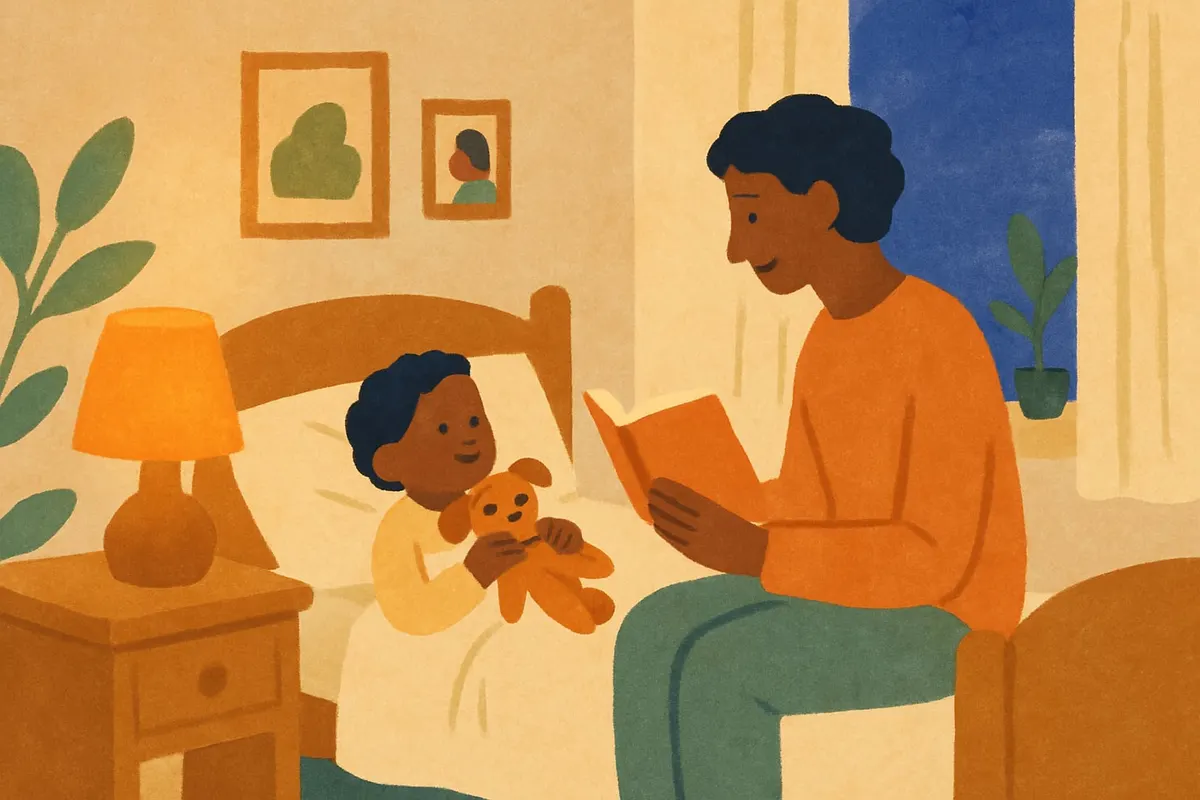
Child won't go to sleep: a bedtime routine in 4 steps instead of a 90-minute fight
The third glass of water, the hallway light, the voice from the kitchen. Most bedtime fights aren't about sleep. They're about timing, light and letting go of you. Here is what's going on, a routine that holds from two to sixteen, and the signs that mean it's time to call the doctor.
Co-parenting schedule after separation: alternating weeks, the handover, and the sentences that take the fight out
One week here, one week there, and in between a gym bag in the wrong flat. A guide to the first year after the separation: what children need at each age, how to make the handover day boring, how to write to your ex without a fight, and when counselling helps.